Building apps for AI
What does MCP mean? USB-C for AI? What?
Background
When you ask your AI agent, “Am I free tomorrow?”, it doesn’t know! But, can it?
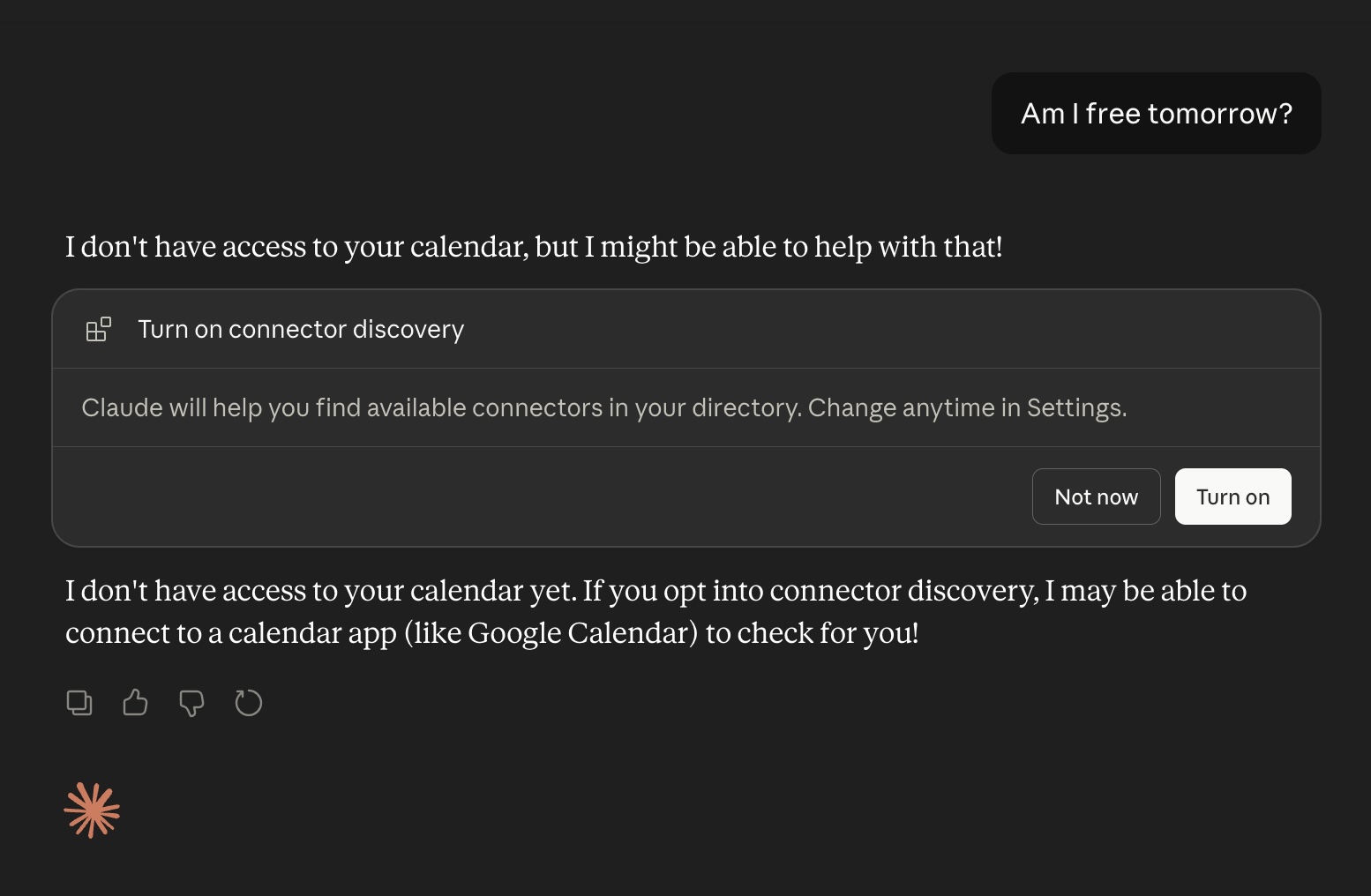
The underlying idea that enables this kind of communication with external tools is called MCP (Model Context Protocol). I intentionally avoided putting MCP in the title because, when I first came across the term, I had no idea what it meant. Model Context Protocol sounds dense and overly technical at first glance.
So I started reading about it.
I came across explanations like: “MCP is like USB-C for AI models.” While that analogy may make sense to some people, I still found it confusing. I’ve managed chipsets that implemented USB standards, and I still had to stop and think about what people actually meant.
If I find this confusing, there’s a good chance my 11-year old would too.
But despite the intimidating name, MCP is actually a very important concept. In this article, I’m going to try to break it down in a practical and intuitive way, both for myself and for anyone else trying to understand what all this MCP talk is really about.
This is also going to be a living document as I continue learning and experimenting, so bear with me as the article evolves.
What is MCP?
Imagine walking into a restaurant. You sit down and tell the waiter:
“I’d like a burger, fries, a chocolate milkshake, and a slice of cake.”
The waiter does not personally cook the burger, fry the fries, blend the milkshake, or bake the cake, at least not in a proper sit-down restaurant. The waiter coordinates with specialists who do.
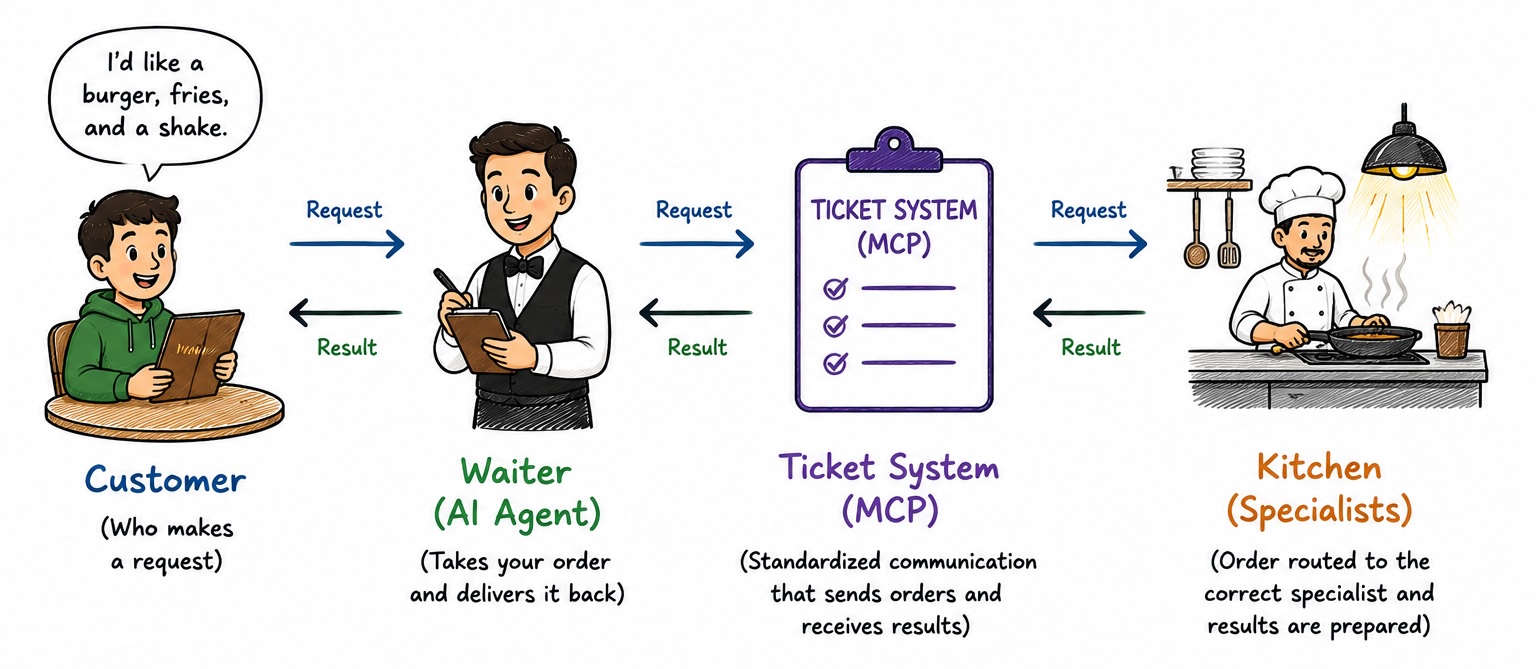
A waiter understands your request, sends each part to the right station in the kitchen, collects the results, and brings everything back to your table, much like an AI agent.
Now imagine every station in the kitchen wanted orders in a different way:
- one only accepts handwritten notes
- another only accepts verbal shouts
- another uses its own abbreviations
- another insists on a custom form
Things get chaotic fast.
So restaurants use a standardized ticket system. Every order follows the same shape. That shared format lets one waiter work with many specialists without reinventing the handoff every time.
MCP (Model Context Protocol) is that kind of idea for AI: a common way for an agent to talk to tools, data, and services.
Nuance (slightly technical)
If you are building an AI feature into your app, you would typically use a direct API integration.
However, if you want AI agents to interact with your service as a tool, you can expose your service through MCP.
This initially confused me. I imagined MCP like USB-C, where end users physically connect devices to computers. But MCP is more like a standardized interface that service providers expose so AI agents can interact with their tools consistently.
In other words, users are usually not “using MCP” directly. Developers and service providers use MCP so AI agents from platforms like OpenAI, Anthropic, or Cursor can discover and use their services in a standardized way. Very different!
Practical examples
Web search
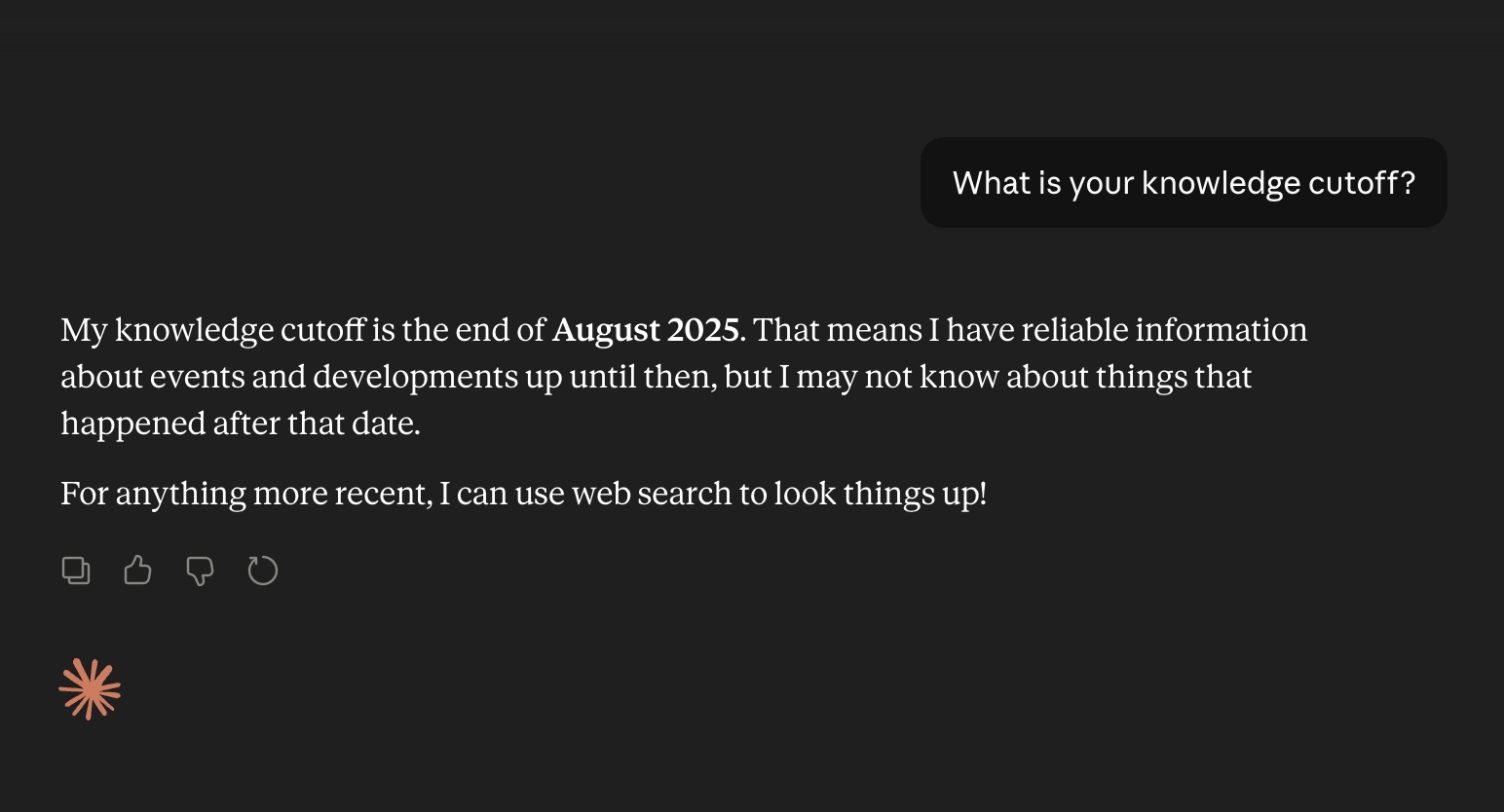
From the previous articles, we learned that LLMs are trained on massive amounts of existing data. Because of this, they have a knowledge cutoff — a point in time after which they may not know about newer events or information. You can even ask an AI assistant for its knowledge cutoff date, and it will usually tell you.
When a user asks about something more recent, the AI agent may use external tools such as web search to retrieve up-to-date information. These tools can come from service providers that expose their services to AI agents through protocols like MCP.
Note: Since web search is such a common capability, many AI systems also maintain direct integrations with providers such as Bing or other search engines. This idea is called RAG, another acronym we’d have to dissect in a separate article.
GBrain
If you have been following the AI space recently, you may have come across GBrain, a project developed by Garry Tan. GBrain exposes its services to AI agents through MCP, allowing agents to interact with it as an external tool or service.
Let’s build something
Coming soon!
References
- Model Context Protocol — Getting started — Official intro to MCP from the protocol authors.
Appendix
International Docking System Standard
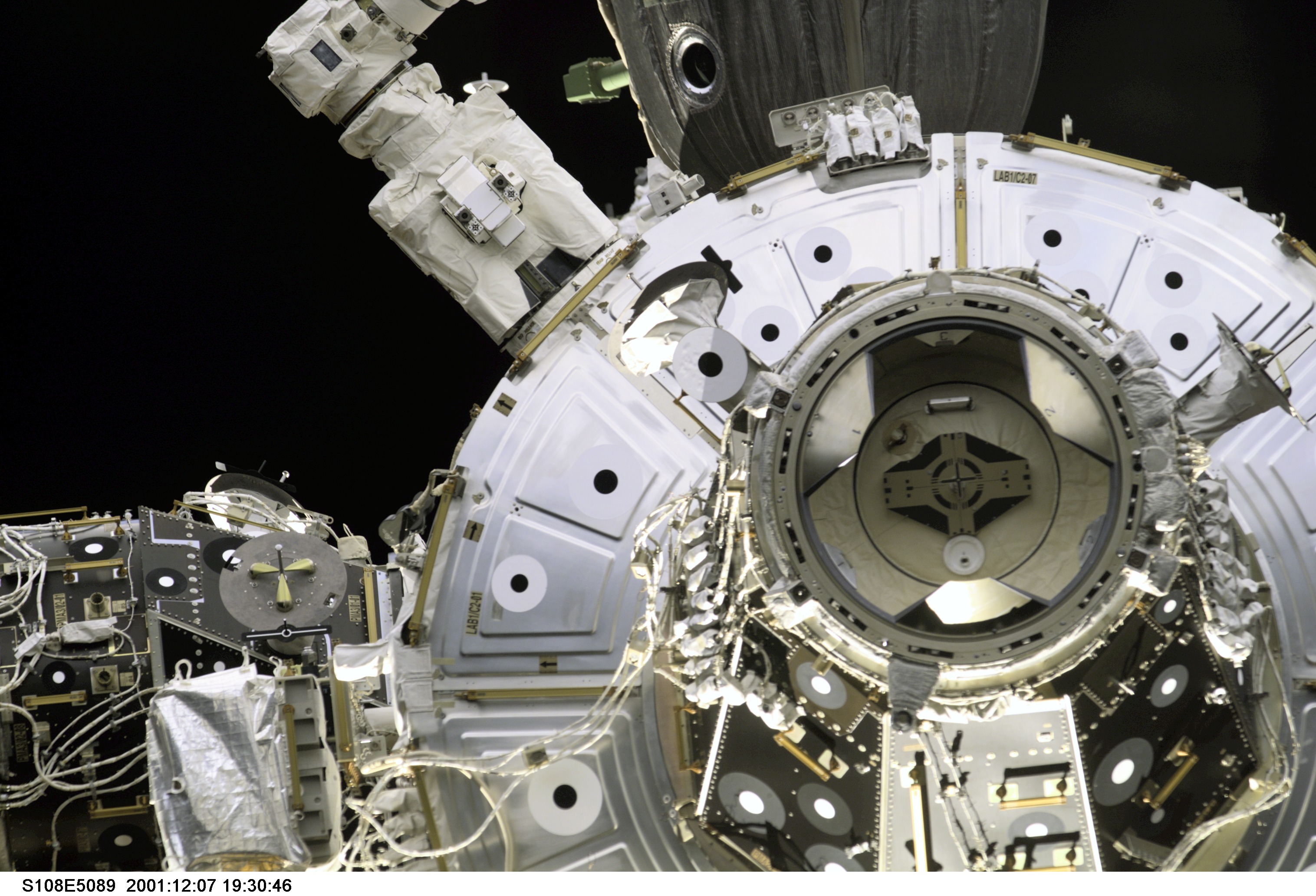
The cover image of this article shows a docking station. The International Docking System Standard (IDSS) is a shared standard that lets spacecraft built by different organizations connect to each other reliably. Instead of every spacecraft inventing its own custom connection method, they follow the same docking rules and interface. If ISS is the AI agent. Docking System Standard is the MCP. SpaceX is the service provider. SpaceX can only deliver their payload, if they can dock.